Photo Collage Maker - FunPic
- 4.4
- Rating
- 10.00M
- Installs
- Free
- Price

 Analysis by App-foxy
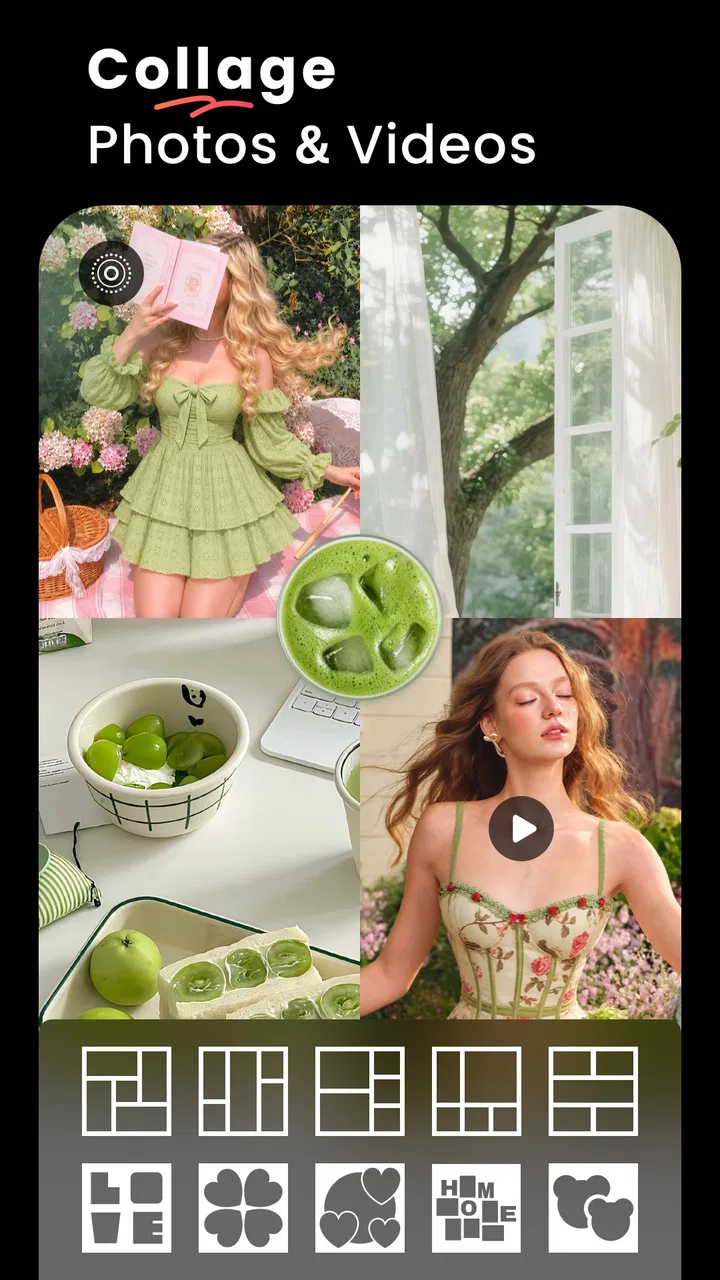
I opened Photo Collage Maker - FunPic with a simple job in mind: turn a scattered group of phone photos into something I could share without spending a long time arranging it. That is the situation where this photography app makes the most sense. It is built around collages, quick visual layouts, and background removal rather than deep manual photo editing, so the experience feels closer to preparing a social post than developing images from scratch.
My first impression was that FunPic aims to reduce the number of decisions between choosing pictures and getting a finished composition. That is useful when I want a birthday grid, a small travel recap, a product image for a marketplace listing, or a clean Instagram post. It is free to install, suitable for Everyone, and developed by Photo Collage & Grid - Foto Grid. The app has reached over 10 million installs and holds a 4.4 average from around 333 thousand ratings, which suggests that its straightforward approach appeals to a broad audience.
From a messy camera roll to a usable collage
I start this section with the practical question behind any collage app: can I turn a camera roll full of unrelated moments into one image that feels intentional? FunPic is most useful when I narrow the selection before editing, and I’ll look at how that choice affects both the finished composition and the time it takes to make one. That sets up the next section: what happens when the job gets more demanding.
You May Also Like

 Google Keep - Notes and lists
Google Keep’s Quiet Growth Shows the Appeal of Simpler Notes
As mobile work gets busier, Google Keep keeps winning a simple contest: capture a thought quickly, find it later, and get on with the day.

 Blood Strike: 2.5 Anniversary
Blood Strike’s Loadouts Turn Every Drop Into a Tactical Gamble
A close look at Blood Strike’s custom loadouts: how fast access to signature weapons reshapes its battle royale rhythm, rewards preparation, and narrows the gap between fights.

 Pandora - Music & Podcasts
Pandora’s Music Is Easy to Start, but Harder to Recover
Pandora’s strength is its low-effort path from a seed to a station. Its weak spot is how much confidence it asks you to place in connection, setup, and quiet recovery.

 8 Ball Pool
 Is Built on Rivalries, Rematches, and Routine
A close look at the rivalries, rematches, shared routines, and unanswered safety questions that turn a quick pool match into a persistent mobile community.

 Samsung Music
’s Quiet Strength Is Playing What You Already Own
Its reach comes less from spectacle than from dependable access to a personal library. That simplicity is both the app’s strongest retention engine and its ceiling.

 AccuWeather: Weather Radar
AccuWeather Review: A Quick, Clear Forecast for Everyday Decisions
For everyday plans, the best forecast is the one you can understand quickly. AccuWeather makes rain timing, radar, and local conditions easy to act on, with a few trade-offs.
More From Our News Desk



Choosing the starting material
The workflow begins with the part I usually find most annoying: deciding which images belong together. FunPic is most helpful when I already have a clear group in mind. For example, I can select several photos from a weekend outing, a set of family snapshots, or different angles of an item I want to show online. The app is not a replacement for organizing a photo library, so the quality of the final result still depends heavily on making a sensible selection before arranging anything.
I recommend starting with images that share a visual purpose rather than simply picking every photo from the same day. A collage containing one wide landscape, two close portraits, and a dark indoor shot can look uneven even when the memories belong together. Choosing pictures with similar lighting or a deliberate contrast gives FunPic better material to work with and reduces the amount of correction needed later.
This is one of the app’s practical strengths: it encourages a quick, outcome-focused workflow. I do not need to create a project, learn a complicated editing language, or prepare a separate canvas in another application. For someone who normally sends a group of images to a friend and asks which one looks best, the collage approach offers a more decisive result.
Building the first layout
Once the photos are selected, the central task is arranging them into a grid or collage. I look for a layout that gives the most important image enough space instead of treating every picture identically. A balanced grid works well for a set of equal moments, while a more varied arrangement is better when one photo is clearly the focus and the others provide context.
The useful insight here is to treat the layout as a handoff between selection and storytelling. The app can place the images together, but it cannot decide what the viewer should notice first. If the main subject is a person, I avoid placing a busy photo directly beside it. If the collage is for a product, I keep the clearest view larger and use the remaining spaces for details. That small decision often improves the result more than changing decorative options.
FunPic is best suited to users who want a finished visual quickly, not to designers who need exact control over every measurement. Compared with a general photo editor, it puts the composition task first. Compared with making a collage manually in a presentation or design tool, it removes much of the empty-canvas work. The trade-off is that a specialist designer may find the available arrangement less precise than a fully manual workflow.
Using the background eraser with a purpose
The background eraser is the feature that gives the app more range than a basic grid maker. I find it most useful when one subject needs to be separated from its surroundings before being placed into a collage. A portrait with a distracting room behind it, a shoe photographed on a cluttered floor, or a small object that needs a cleaner presentation can benefit from this step.
I would not use the eraser automatically on every image. A natural background can provide context, and removing it may make a personal photo feel strangely cut out. The better workflow is to duplicate the idea mentally: keep the original image for a memory collage, but use the isolated subject when the goal is a poster-like composition or a product-focused image.
Edges deserve extra attention. Hair, leaves, thin straps, and objects with similar colors to their background are the places where automatic removal is most likely to look less convincing. I check the outline at normal viewing size before sharing. A cutout can appear acceptable while editing but reveal rough edges once it is surrounded by a plain background. This is a small step, yet it separates a presentable result from one that looks rushed.
Preparing the handoff to social sharing
After the arrangement feels right, I consider where the image is going. A collage intended for Instagram needs a different balance from one sent privately in a chat. For a social post, I leave enough breathing room around faces and avoid putting important details close to the outer edge. For a message to a friend, I can prioritize the photos themselves and use less decoration.
This is where FunPic fits naturally into an everyday scenario. Imagine returning from a short trip with a dozen good pictures but no desire to write a long album caption. I can choose the strongest views, place the group photo in a prominent position, remove a distracting background from one portrait, and create a single image that tells the story at a glance. The handoff is simple: instead of sending many separate files, I deliver one visual summary.
The same process works for a small seller who needs a quick listing image. I can isolate an item, combine a full view with close details, and make the important information visible without opening a desktop editor. I would still inspect the final image carefully, because a collage tool is not a substitute for accurate product photography or professional retouching. It is a fast presentation layer, not a complete commercial studio.
Where the workflow saves time
The app’s main advantage is the short distance between idea and output. It is not asking me to master layers, masks, or a large collection of technical controls before producing something shareable. That makes it approachable for casual users, families, students, and anyone who wants a visual result without turning the task into a project.
It also works well when the source material is inconsistent. A group of phone photos may have different orientations and proportions, yet a collage can make those differences feel intentional. Instead of forcing every image into a single crop, I can use the surrounding layout to give each picture a sensible place. This is particularly useful for event recaps, where the photos were not taken with one fixed composition in mind.
Another practical tip is to decide the visual hierarchy before experimenting with decoration. I first make sure the faces, objects, or scenery are readable. Only after that do I consider whether a background treatment improves the image. Decorative choices cannot rescue a weak crop, while a strong crop can often carry a simple design.
Where the workflow becomes less comfortable
The same simplicity that makes FunPic approachable can feel limiting when I want exact, repeatable control. If I am creating a branded series with strict spacing, carefully matched typography, or a precise visual system, I would rather use a dedicated design application. FunPic is convenient for one-off creations, but a professional workflow may require more control than a collage-focused tool is designed to provide.
Background removal also introduces a quality checkpoint that should not be skipped. It is a helpful shortcut, but shortcuts need supervision. Fine details can require patience, and users expecting every cutout to look perfect immediately may be disappointed. I see the feature as a time-saver for ordinary images, not as a guarantee of studio-quality masking in difficult scenes.
There is also a financial consideration. The app is free, but in-app purchases range from $9.99 to $25.99 per item. That does not make the free starting point unattractive, but I would decide how often I expect to use premium options before paying. Someone who only needs an occasional birthday collage may be satisfied with the free experience, while a frequent creator may find an upgrade more reasonable if it removes recurring friction. I would not pay simply because more options exist; I would pay only if they solve a problem I regularly encounter.
How it compares with familiar alternatives
Against a standard gallery editor, FunPic offers a more deliberate way to combine several images into one shareable composition. A gallery app is usually better for quick crops, rotations, and basic adjustments to individual photos. FunPic becomes more useful when the outcome depends on relationships between images rather than on improving one image alone.
Against a full design platform, it is faster to approach but less suitable for complex visual systems. A design platform may provide stronger control over text, alignment, reusable templates, and brand consistency. FunPic is the better choice when I want to make a collage during a short break, especially if I do not want to learn a broad toolset for one small task.
Against a dedicated background-removal service, its advantage is keeping the cutout step inside the same collage workflow. I do not have to export an isolated subject, move it to another app, and then rebuild the composition. The disadvantage is that users who care primarily about extremely accurate masking may prefer a specialist tool with more focused controls.
Practical decisions before sharing
Before I consider a collage finished, I check three things. First, I make sure the crop does not cut through a face, hand, or important product detail. Second, I look at the smallest image in the design and ask whether it still contributes anything. Third, I view the whole composition at a reduced size, because a layout that looks attractive up close may become visually crowded in a feed.
I also keep the intended recipient in mind. A playful arrangement can work for friends, while a cleaner grid may be more appropriate for a school announcement or a sales post. FunPic gives me a quick starting point, but the right level of decoration depends on context. The app is most effective when I use its convenience without allowing convenience to make every collage look the same.
Users may reasonably wonder whether the app is approachable on older devices. Its minimum operating-system requirement is Android 7.0, so it does not demand a particularly recent Android release. I would still expect the smoothness of image selection and background processing to depend on the phone and the size of the photos being handled. Keeping the source images purposeful rather than loading an entire camera roll is a sensible way to keep the session manageable.
Another question is whether it suits children or family use. Its Everyone content rating makes it broadly accessible, and the basic concept is easy to understand. I would still guide younger users when sharing photos publicly, especially when the collage includes other people. The editing task may be simple, but choosing what to publish remains an important judgment.
Who should use it, and who should skip it
I recommend FunPic to people who regularly need quick visual summaries: travelers making a recap, parents collecting moments from an event, students preparing a simple presentation image, and casual sellers showing an item from several angles. It is also a good fit for anyone who finds a blank design canvas intimidating but still wants more than a single unedited photo.
I would steer professional photographers, social media teams with strict brand templates, and users who need advanced retouching toward a more specialized editor. They may appreciate the speed, but they are likely to notice the limits of a streamlined collage workflow sooner. The app is not trying to replace every photography tool, and judging it by that standard would miss its actual value.
Photo Collage Maker - FunPic is currently at version 2.5.0, and its established audience gives it a reassuring level of visibility in the photography category. I like that its purpose is easy to understand: bring photos together, clean up a subject when useful, and create something ready to share. The experience is strongest when the task is small, visual, and time-sensitive.
My final recommendation is to try it when the alternative is postponing a collage because a larger editor feels like too much work. Start with a focused set of images, choose the layout around the main subject, use the background eraser selectively, and inspect the edges before exporting or sharing. The best reason to use FunPic is not that it replaces every editor, but that it turns a scattered set of photos into a coherent result with very little ceremony.
FAQs for Photo Collage Maker - FunPic
01What features does Photo Collage Maker - FunPic offer?
Photo Collage Maker - FunPic provides a wide range of features, including customizable templates, various photo effects, and editing tools such as cropping, rotating, and adjusting brightness and contrast. The app also offers stickers, text overlays, and background patterns to enhance your collages, making it a versatile tool for creative photo editing.
02Is Photo Collage Maker - FunPic user-friendly for beginners?
Yes, Photo Collage Maker - FunPic is designed with an intuitive interface that is easy to navigate, making it suitable for users of all skill levels. The app provides simple drag-and-drop functionality and step-by-step guidance, ensuring a smooth and enjoyable experience for beginners looking to create stunning photo collages.
03Does Photo Collage Maker - FunPic require an internet connection to function?
No, Photo Collage Maker - FunPic does not require an internet connection for most of its features. You can create and edit collages offline. However, an internet connection might be necessary to access certain online resources, such as downloading additional templates or sharing your creations on social media.
04Are there any in-app purchases or subscriptions within Photo Collage Maker - FunPic?
Photo Collage Maker - FunPic offers a free version with basic features. However, to unlock advanced tools and premium templates, users can opt for in-app purchases or subscribe to a premium plan. The premium version provides an ad-free experience and access to exclusive content, enhancing your collage-making capabilities.
05How does Photo Collage Maker - FunPic handle user privacy and data security?
Photo Collage Maker - FunPic prioritizes user privacy and data security. The app does not store personal photos or data on external servers, ensuring that your content remains private. It complies with standard privacy regulations and offers clear terms of service to inform users about data handling practices, providing peace of mind when using the app.
Pros
- User-friendly interface for quick edits.
- Wide variety of templates available.
- High-resolution export options.
- Seamless integration with social media.
- Frequent updates with new features.
Cons
- Free version has limited features.
- Occasional ads can be intrusive.
- Some templates require in-app purchases.
- No cloud backup for projects.
- Limited text customization options.

Photo Collage Maker - FunPic
Gallery